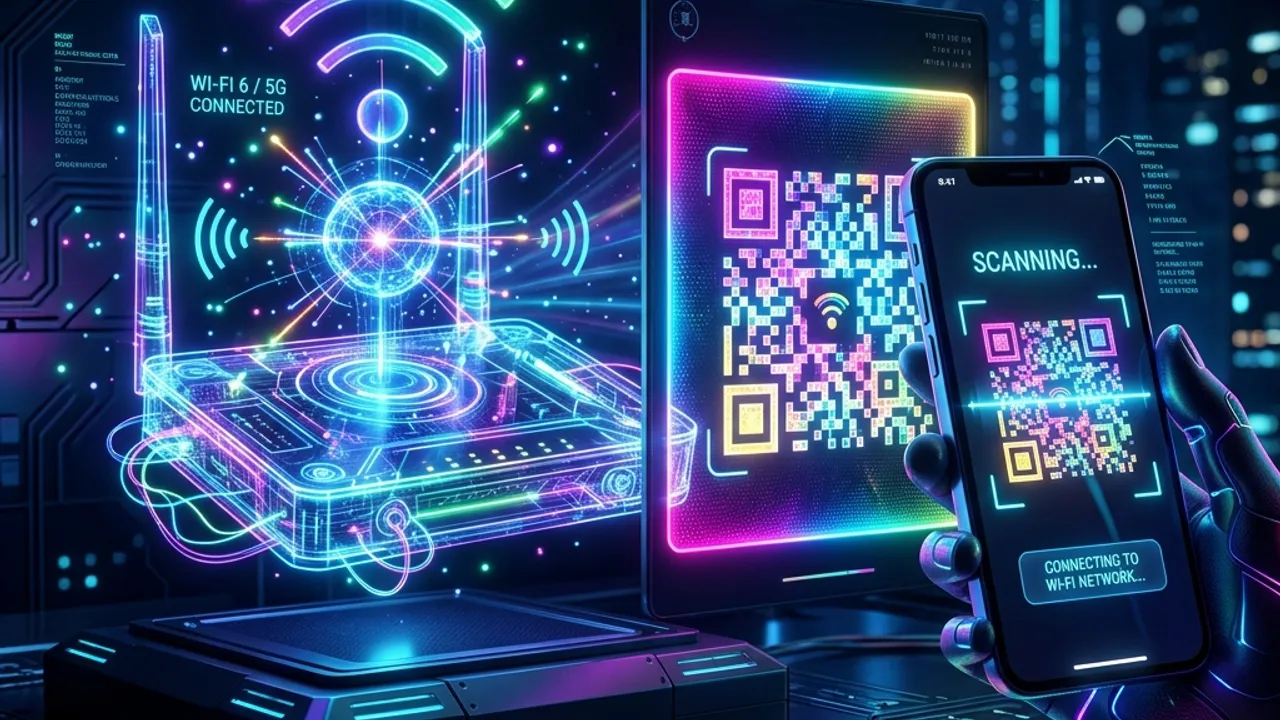
Whether you are hosting guests at home, welcoming clients to a meeting room, or managing an Airbnb property, one of the most common questions you will hear is: "What is the Wi-Fi password?"
Sharing a complex password containing mixed-case letters, numbers, and symbols can be a hassle. Writing it on a slip of paper often leads to typos, and typing it manually on a guest's device compromises your network's privacy.
To solve this inconvenience and enhance security, you can make a Wi-Fi QR code. By scanning this code with a smartphone camera, users can connect to your internet instantly without seeing or typing the password. Here is a guide on how Wi-Fi QR codes work and how to generate one securely.
1. How Wi-Fi QR Codes Work
Wi-Fi sharing QR codes operate using a standardized text protocol. When a smartphone camera scans the code, it reads a specific string format:
WIFI:S:NetworkName;T:WPA;P:YourPassword;;
Mobile operating systems (both Android and iOS) recognize this format. Instead of opening a web browser, the device automatically initiates network configuration and connects to the SSID.
Wi-Fi Sharing Method Comparison
There are different ways to share Wi-Fi access with visitors, each with distinct benefits and limitations:
| Method | Speed and Convenience | Password Exposure | Key Advantages and Limits |
|---|---|---|---|
| Manual Typing | Very Slow (prone to typos) | Exposed | Simple but tedious, and poses a minor security risk. |
| Device-to-Device Share | Moderate (requires proximity) | Not Exposed | Native feature, but can fail when connecting different brands (e.g., iPhone to Android). |
| QR Code Scan | Instant (1-second connection) | Not Exposed | Highly compatible across all devices. Easy to print and display. |
2. Generating a Wi-Fi QR Code Securely in Your Browser
When creating a QR code that contains sensitive network credentials, privacy is paramount. Many online QR code generators upload your network name (SSID) and password to their remote servers, creating a potential security risk.
To protect your credentials, use a generator that processes data locally in your browser memory (sandbox). This ensures that your network details never travel across the internet.
Steps to Generate and Display Your QR Code:
- Gather Details: Find your exact network name (SSID), password, and security protocol (usually WPA/WPA2/WPA3) on your router.
- Input Data: Enter these details into a browser-side QR code generator.
- Generate and Save: Click generate and download the output image file (typically a PNG).
- Display: Print the QR code and frame it near your router, office desk, or entryway for easy guest access.
3. Frequently Asked Questions (FAQ)
Q1. Do both iPhone and Android users scan this code the same way? A1. Yes. On Android devices, users can scan the code using the default camera app or the quick settings tile. On iOS, users can point their built-in camera at the code and tap the "Join Network" pop-up notification.
Q2. What happens if I change my home Wi-Fi password? A2. Since the SSID and password are baked directly into the QR code image, changing your credentials invalidates the existing printout. You must generate and print a new QR code with the updated credentials.
Q3. Can someone extract my password from the printed QR code? A3. Standard camera apps only prompt the user to join the network. However, using a generic QR code parser or scanner app can reveal the underlying text string (including the password). For public spaces, it is best to cycle passwords occasionally.
4. Make Your Guest Wi-Fi QR Code Securely
If you need a safe tool to generate a Wi-Fi card without risk of data leaks, use our local QR Code Generator.
The tool converts your input into a QR code using browser-side scripts, keeping your credentials secure. For larger business marketing integrations, check out our guide on QR Code Marketing Strategies.