Whether you are trying to conceive or trying to avoid it, the questions end up being the same: if we have sex three days before ovulation, what are the actual odds? Is ovulation day really the best day? And when you are outside the fertile window, is the chance truly close to zero? Search for answers and you mostly find vague lines like "you are most fertile around ovulation" or forum posts quoting numbers with no source.
This guide puts the day-by-day odds of conception, counted from ovulation, into one table with the original research behind it. It then looks at how much those odds change with age, why "fertile window" and "ovulation window" are not quite the same thing, and why treating the rest of the month as a "safe period" is risky. Because this is health information, every number comes from a primary study or a medical society, and decisions about your own situation are best confirmed with a doctor or gynecologist.
1. Day-by-day pregnancy odds: the two days before ovulation and ovulation day lead
The first study to measure day-specific conception odds precisely was published in the New England Journal of Medicine in 1995 by Allen Wilcox and colleagues at the US National Institute of Environmental Health Sciences. They followed 221 women who were trying to conceive across 625 menstrual cycles, pinpointed the actual day of ovulation each cycle with daily urine hormone tests, and recorded the days on which couples had intercourse. Counted from ovulation day (D0), the results look like this:
| Day relative to ovulation | Approx. chance of pregnancy from intercourse that day | What it means |
|---|---|---|
| D-6 or earlier | 0% (no pregnancies observed) | Sperm rarely survive until ovulation |
| D-5 | about 10% | Fertile window opens |
| D-4 | about 16% | |
| D-3 | about 14% | |
| D-2 | about 27% | Odds jump sharply |
| D-1 | about 31% | |
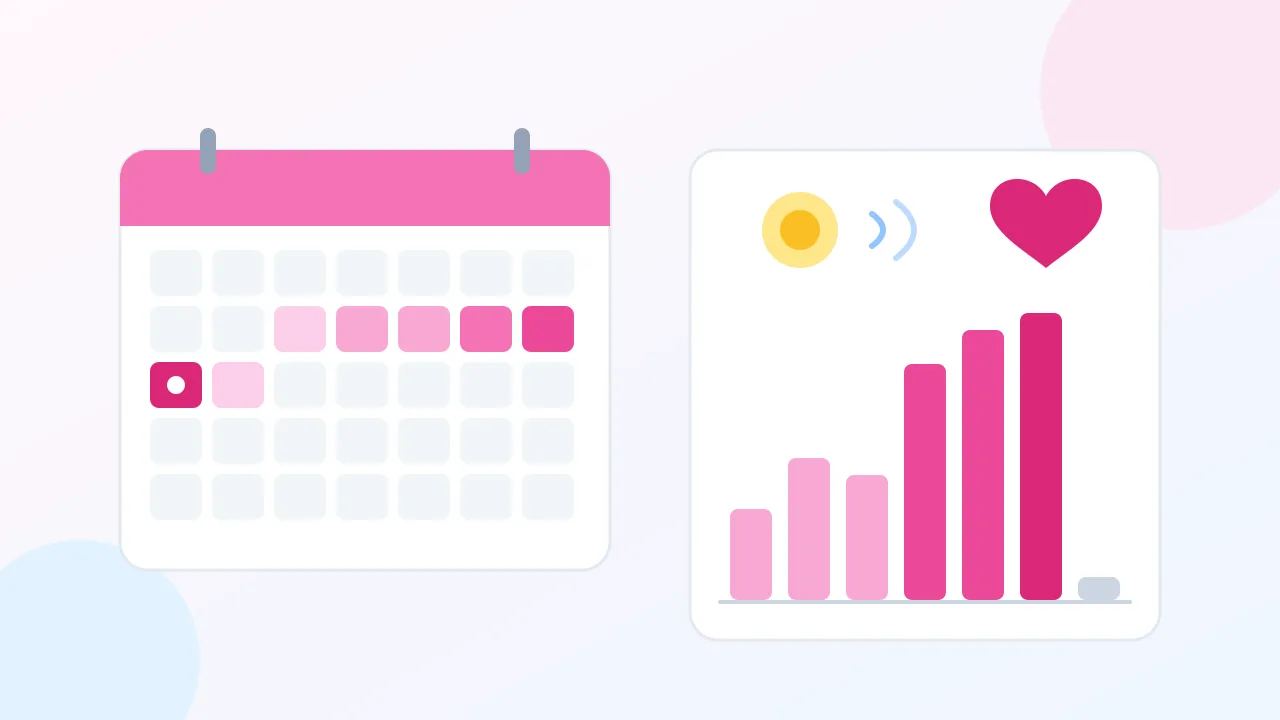
| D0 (ovulation day) | about 33% | Peak |
| D+1 or later | 0% (no pregnancies observed) | The egg's lifespan is ending |
Source: Wilcox AJ, Weinberg CR, Baird DD. Timing of sexual intercourse in relation to ovulation. N Engl J Med 1995;333:1517-21.
Two things stand out. First, pregnancy is possible on only about six days, the six days ending on ovulation day. Second, within those six days, the three days from two days before ovulation through ovulation day carry roughly three times the odds of the first day of the window.
Keep in mind that each figure estimates the chance of pregnancy in that cycle if intercourse happens on that single day. In real life most couples have sex more than once during the window, so the chance for the whole cycle can be higher. An American Society for Reproductive Medicine (ASRM) committee opinion, drawing on the same research group's data, reports a per-cycle pregnancy rate of about 37% with daily intercourse during the fertile window, about 33% with intercourse every other day, and about 15% with intercourse once a week. Because daily and every-other-day timing perform almost the same, ASRM advises that intercourse every one to two days in the fertile window is enough.
A follow-up analysis (Dunson and colleagues, 1999) found that depending on how ovulation is estimated, the peak can shift a day earlier to D-2 or D-1. The practical takeaway does not change: rather than trying to hit ovulation day exactly, start two or three days ahead of it.
2. Why the days before ovulation beat the days after: five days vs. one day
The shape of that table comes down to the very different lifespans of sperm and egg.
- Sperm can survive inside the body for up to about five days when cervical mucus is favorable. That is why intercourse five days before ovulation can still lead to pregnancy: some sperm are still waiting when the egg arrives.
- The egg can be fertilized for only about 12 to 24 hours after ovulation. By the day after ovulation, the chance drops off quickly.
The most successful scenario is sperm already waiting in the fallopian tube when the egg is released. It also means that waiting until you are sure ovulation has happened may be too late. A positive ovulation test (LH test) usually means ovulation within roughly 24 to 36 hours, so the day of the positive result and the day after are effectively the last opportunities in that cycle.
3. Fertile window vs. ovulation window: not the same thing
People often use these terms interchangeably. There is no single official definition, but they are usually distinguished like this:
| Term | Span | Meaning | Pregnancy odds |
|---|---|---|---|
| Ovulation day | One day (D0) | The day the ovary actually releases an egg | about 33% (peak) |
| Ovulation window | About 2 to 3 days around ovulation | The narrow span when ovulation is most likely | The highest-odds core |
| Fertile window | About 6 to 7 days (D-5 to D+1) | A wider span that adds the days sperm can wait | about 10% to 33% |
In short, the ovulation window sits inside the fertile window, while the fertile window also counts the earlier days when sperm can already be waiting. This difference in definitions is also why clinics, apps and calculators label the fertile window slightly differently, for example "5 days before to 1 day after ovulation" versus "3 to 4 days on either side of ovulation." The HandyWeb ovulation calculator follows the research and marks the fertile window from 5 days before to 1 day after the estimated ovulation day. The day after ovulation shows almost no chance in the study, but an estimated ovulation date can easily be off by a day, so the extra day is a margin of safety.
4. Pregnancy odds by age: the same day means different odds at 25 and 38
The day-by-day table above is an average across all participants. Actual odds vary considerably with a woman's age. A study of 782 couples in seven European cities (Dunson, Colombo and Baird, Human Reproduction 2002) compared the chance of a clinical pregnancy after intercourse on the most fertile day of the cycle by age group.
| Woman's age | Approx. odds on the most fertile day | Per-cycle odds for reference |
|---|---|---|
| 19 to 26 | about 50% | around 20% to 25% per cycle |
| 27 to 34 | about 40% | about 20% at age 30 |
| 35 to 39 | about 30% | gradually declining |
| 40 and over | not included in the study | under 5% at age 40 |
Sources: Dunson DB et al., Hum Reprod 2002;17(5):1399-1403. Per-cycle reference values from the ASRM patient booklet "Age and Fertility."
Note that "odds on the most fertile day" and "per-cycle odds" are different measures. The first is the chance when intercourse lands on the best possible day; the second is the average chance that a healthy couple, living normally, conceives in a given cycle. Both decline with age, and the drop steepens after 35. The same study also found an effect of male age: for women in their late thirties, the odds were lower when the partner was five years older.
Over time, though, the numbers are far from discouraging. According to UK NICE guidance, more than 80% of women under 40 having regular unprotected sex conceive within one year, and more than 90% within two years. Missing in one cycle does not mean something is wrong.
5. Outside the fertile window, is the chance really zero?
In the Wilcox study, no pregnancies occurred outside the six-day window. But that result depends on knowing the true ovulation day from daily hormone testing. A fertile window predicted from a calendar or an app can be off.
- In a 2000 BMJ study by the same team, only about 30% of women had their fertile window entirely within days 10 to 17 of the cycle, the range often described as "the fertile days." Even women with regular cycles had some chance of being in the fertile window on almost any day, including days just before their expected period.
- Stress, poor sleep, weight change, travel and illness can all move ovulation earlier or later.
- People with short cycles and long periods can enter the fertile window right after their period ends.
So "not in the fertile window" does not mean "safe." The US Centers for Disease Control and Prevention (CDC) lists a first-year failure rate of 2% to 23% with typical use for fertility awareness-based methods, including the calendar method. That is considerably higher than many other options, so if you do not want to become pregnant, do not rely on date calculations alone and use a reliable method of contraception as well.
6. When is your fertile window? Worked examples by cycle length
Ovulation is usually estimated at about 14 days before the next expected period. The phase after ovulation (the luteal phase) is relatively constant, while the phase before ovulation varies from person to person. Assuming the last period started on November 1, here is how the dates shift with cycle length:
| Average cycle | Next period due | Estimated ovulation | Fertile window (D-5 to D+1) | Highest-odds 3 days (D-2 to D0) |
|---|---|---|---|---|
| 25 days | Nov 26 | Nov 12 | Nov 7 to Nov 13 | Nov 10 to Nov 12 |
| 28 days | Nov 29 | Nov 15 | Nov 10 to Nov 16 | Nov 13 to Nov 15 |
| 32 days | Dec 3 | Nov 19 | Nov 14 to Nov 20 | Nov 17 to Nov 19 |
| 35 days | Dec 6 | Nov 22 | Nov 17 to Nov 23 | Nov 20 to Nov 22 |
Two people who start their period on the same day can have estimated ovulation dates ten days apart if one has a 25-day cycle and the other a 35-day cycle. That is why rules of thumb like "a week after your period ends" do not work for everyone. If your cycle length varies from month to month, enter the average of your last three to six cycles, and also try your shortest and longest cycles to see the full range.
7. How to use this, depending on your goal
If you are trying to conceive, check your estimated ovulation date first and plan intercourse every one to two days starting three or four days before it. Adding ovulation tests from two or three days before the estimated date brings you closer to the real ovulation time. Trying to hit one exact day can add stress, so using the whole fertile window comfortably tends to work better.
If you are trying to avoid pregnancy, treat the result only as "this stretch is especially high-risk," and do not assume the remaining days are safe. As shown above, the predicted window and the real one can differ.
Also know when to see a doctor. ASRM and the American College of Obstetricians and Gynecologists (ACOG) recommend a fertility evaluation after 12 months of trying without contraception if you are under 35, or after 6 months if you are 35 or older. If you are over 40, have very irregular periods, or have a history of pelvic conditions, it is reasonable to seek advice sooner. If you have lost track of how many months it has been since you started trying, the date calculator counts the span for you in seconds.
8. Frequently asked questions (FAQ)
Q1. Is ovulation day the day with the highest chance of pregnancy?
In the Wilcox study, ovulation day was highest at about 33%, but the day before (about 31%) and two days before (about 27%) were nearly as high, and later analyses placed the peak one or two days before ovulation. Since pinpointing ovulation is hard, starting two or three days before the estimated date is the better strategy in practice.
Q2. How different are the odds in your twenties and thirties?
On the most fertile day, reported odds were about 50% for women aged 19 to 26, about 40% for 27 to 34, and about 30% for 35 to 39 (Dunson et al., 2002). As an average per cycle, the figures commonly given are about 20% at 30 and under 5% at 40. Over a full year, however, more than 80% of couples with a woman under 40 conceive, so one or two unsuccessful cycles are not a reason to panic.
Q3. Can you get pregnant outside the fertile window?
If the true ovulation day were known exactly, the chance outside the window would be very low. The problem is that a fertile window calculated from a calendar or an app can differ from reality. Ovulation shifts easily with stress and health, and typical-use failure rates for calendar-based fertility awareness methods reach the low twenties per year. If you do not want to become pregnant, use a separate contraceptive method.
Q4. How long is the fertile window, and how does it differ from the ovulation window?
The fertile window combines sperm survival (up to about five days) with the egg's lifespan (about one day), giving roughly six to seven days from five days before to one day after ovulation. The ovulation window usually refers to the two or three days around ovulation when it is most likely to happen. Definitions vary slightly between sources, so the ranges shown may differ.
9. Find your fertile window and highest-odds days with the ovulation calculator
To use the day-by-day table in this guide, you first need to know when your D0 is. Enter the first day of your last period and your average cycle length in the ovulation calculator, and it shows your estimated ovulation day and fertile window (D-5 to D+1) for the next three cycles, both as a table and on a color-coded calendar. The two days before the estimated ovulation day through ovulation day itself are the three highest-odds days from the table above, and the calendar also shows whether today falls inside your fertile window. Your dates are never sent to a server; everything is calculated in your browser.
For date gaps such as how many months you have been trying or how many days remain until your next period, use the date calculator alongside it. The results are estimates based on your average cycle, so do not use them as contraception or as the sole basis for judging whether pregnancy is possible, and see a doctor if you have concerns.